Getting started
How to become a babysitter in Sydney (2026)
What you need to start babysitting in Sydney: the age question, when NSW requires a Working With Children Check, and which first aid course to do. How to get the check, and how to land the first job.

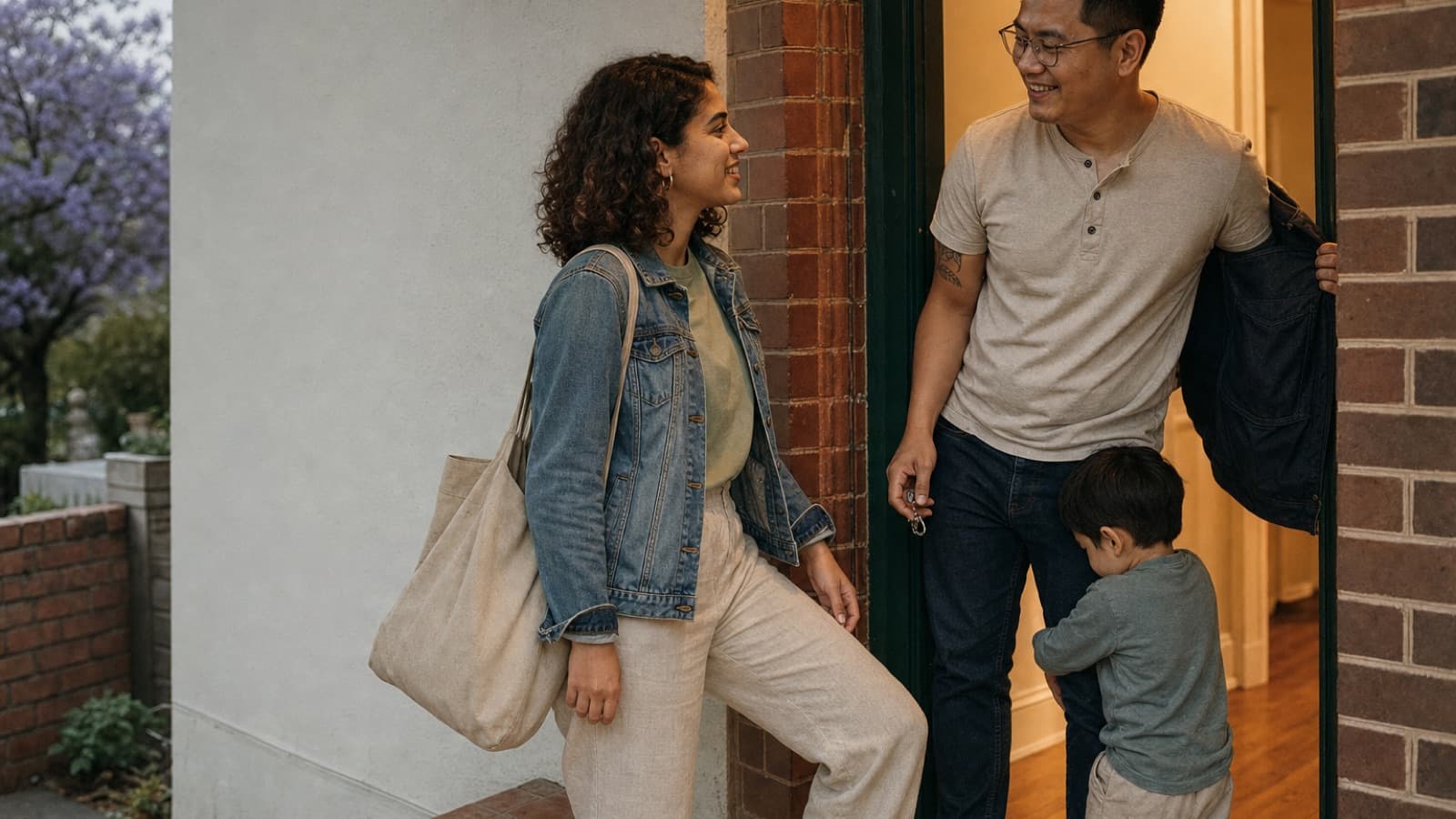
Most of what is written about starting out as a babysitter was written for another country, or for every state at once, and it gets NSW wrong in the places that matter. This is the Sydney version: what the law asks of you, what parents ask of you, and the order to do it in. If you are somewhere else in Australia, the check is the part that changes, and babysitter requirements in Australia has every state's in one table. It is not legal advice, and none of it costs more than a day.
How old you need to be
There is no law in NSW that sets a minimum age for babysitting. What exists instead is the parents' duty of care: leaving their child with a 14-year-old is their decision, and the responsibility stays with them. In practice most families hire from about 16, and pay more for someone who can drive. What is usual at 12, 13 and 14 is in how old do you have to be to babysit.
Two ages do matter. In NSW, under 18 you are still legally a child yourself, which is why the Check scheme does not apply to you; from 18 you can hold one, and most regular work expects one. On AusBabysitters you can list from 16, and a profile that says you are 16 is treated as exactly that: families can see your age and decide what they are comfortable with. If you are still at school, our guide to babysitting jobs for teens covers where the first jobs come from, the hours you can sell, and getting home.
Whether you need a Working With Children Check
This is the question most guides get wrong, usually by saying a Check is mandatory everywhere. In NSW it is not. The Office of the Children's Guardian lists babysitting by private arrangement among the work that does not need a Check. If a family finds you, agrees a rate with you and pays you directly, the law does not require one.
It does require one the moment the shape of the work changes. Babysit through an agency and you need a Check. Become a family's regular nanny, holding a set of hours every week, and you need a Check, and the family is legally expected to verify it. Our guide on babysitter vs nanny walks that line, because drift from one to the other is the common way a babysitter ends up in work that needed a Check nobody thought to get.
Get one anyway if you are 18. Parents cannot tell the difference between a babysitter the law exempts and one who has never thought about it, so most of them simply ask, and a babysitter who answers with a number is easier to book. It is also half of what our verified badge checks.
Getting the Check
Applying, in order
- Start the application online at Service NSW, as a paid worker, not a volunteer
- Take the application number and four original identity documents to a Service NSW centre
- Pay $112. It covers five years
- Wait for the email with your WWC number, then give it to us under Verification so we can check it
Apply through the Service NSW application page. You fill in the form online, then take the number it gives you to a service centre with your identity documents, and the fee is paid there. The Office of the Children's Guardian then runs a national police check and looks for reportable workplace misconduct, and emails you a clearance number when it is done. The number is WWC, seven digits, and a letter.
Parents check the number by typing it into a government form with your family name and date of birth. Expect to be asked for all three, and answer quickly. We have written up what they see when they do.
Outside NSW the check has a different name, a different price and, in Queensland, no exemption for private babysitting. Babysitter requirements in Australia has every state and territory in one table, and what to do when you move.
First aid: which course
Nobody makes you hold a first aid certificate to babysit. Almost every parent asks, and the difference between "yes, here is the certificate" and "I've been meaning to" is real at the point of booking.
There are two courses with nearly the same name. HLTAID011 Provide First Aid is the general workplace course. HLTAID012 Provide First Aid in an Education and Care Setting is the same content with infant and child CPR, anaphylaxis and asthma added, and it is the one childcare centres require of their staff. Do HLTAID012. The certificate is recognised for three years, the CPR part is expected to be refreshed every year, and the whole thing is a few hours of online theory plus a practical session in a room with a mannequin.
The Australian Nanny Association's minimum standard for a nanny is exactly this set: 18 or over, a current Check, a current first aid certificate and current CPR. Meet it and you are ready for regular work, not only casual nights.
What qualifications do you need to be a babysitter?
None. No qualification is required to babysit anywhere in Australia, and no course turns you into a babysitter. What families ask for instead is evidence, and only two pieces of it come up often enough to be worth your money.
The first is first aid, and specifically HLTAID012 above. The second is the check your state runs, because it is the one thing on your profile that somebody other than you has confirmed.
The qualification people ask us about is a Certificate III in Early Childhood Education and Care. It is real and it is the right one for centre work, where it is the minimum staff requirement. It is also a year of study for a job that is nothing like an evening in somebody's house, and families booking a babysitter do not ask for it. If you already hold one, put it on your profile, because it reads well. If you were about to enrol only so you could babysit, you do not have to.
Deciding what to charge
Casual babysitting in Sydney in 2026 mostly settles between $25 and $40 an hour. Starting out with school-aged children puts you in the high $20s. A few years of real work, or evenings that include dinner, bath and bed, put you in the $30s, and newborn or additional needs experience puts you above that. We keep a separate guide to what to charge, including how to price three children against one and where the legal floor sits once the work turns regular.
Whatever the number, put it on your profile. Parents filter by rate, and a profile without one reads as a negotiation they do not have time for. We never take a cut of it: what a family pays you is yours.
How to start babysitting
The first three jobs come from people who already know you. A neighbour, a family friend, a parent on your street, the family whose children you have minded at Christmas. Ask them directly and name the nights you are free, because "let me know if you ever need someone" is easy to forget and "I can do Friday and Saturday" is not.
After that the first job from a stranger is the hard one, because everything a parent uses to decide is something you do not have yet. Three things shorten that.
Before you list
- A clear photo of your face, not a group shot or sunglasses
- Two people a parent can ring, even if they are a neighbour and an aunt whose kids you have minded
- One paragraph about what you have actually done: ages, how often, what a normal evening involved
Minding cousins, younger siblings or a neighbour's children counts. Parents are not hiring a résumé, they are hiring the person who was calm the last time a two-year-old would not go down. Say that, plainly, with the ages, and if you want it on paper as well, our babysitter resume guide has a one-page template.
Then list where families are looking. Local parents' groups on Facebook fill most casual babysitting in Sydney, and a post there with your suburb, your rate and your Check number does well. You can become a babysitter here in about three minutes: the profile is free and public, families nearest you see it first, and they message you through the site so your number stays yours until you choose to give it out. The ads already open are in babysitting jobs in Sydney.
The first booking
Turn up ten minutes early. Parents are usually on their way out the door, and those ten minutes are the only briefing you get.
Ask before they leave
- Where they will be and the number that will actually be answered
- A second contact if that number is not
- Allergies and any medication, with the dose written down
- Bedtime, and what the routine looks like when it goes well
- What the children are allowed: screens, snacks, the backyard
- Where the first aid kit is
Send one message while they are out, a couple of hours in: asleep, fine, nothing to report. Parents who get that message book again. Leave the kitchen how you found it, and if something went wrong, say so before they ask.
How to make money babysitting
Babysitting pays by the hour, and there is no version of it that does not. What moves your income is which hours you sell and how many of them repeat.
Friday and Saturday evenings are the hours families cannot cover themselves, and they fill first. School pickup, three to six on a weekday, is the other block that is short of people. Being free for those two is worth more than any line on your profile.
Regulars beat one-offs. A family who books you every second Friday costs you no travel to a new suburb and no first-visit briefing, and they ask you before they ask anyone else. Two regulars and one Saturday night is a steadier month than eight scattered evenings.
The last lever is the range itself. A current check and a current first aid certificate move you up it rather than winning you the job, which is what makes the fees worth paying. Our what to charge guide has the bands and what sits behind each one. Casual babysitting is not a full-time income and none of this makes it one, but it is the difference between a scattered month and a booked one.
Tax, and the word contractor
For occasional babysitting, a few evenings a month arranged privately, the tax office's own test asks whether you are running a business: advertising, regular and organised, intending to profit. Pocket money from a neighbour is not that, and business.gov.au sets out the difference. As soon as it is regular and advertised, it is income, and it goes on your return whether or not anyone gave you a payslip.
That is nanny territory: how to become a nanny covers the move, and our nanny rates guide has the rest of what a family owes when they employ you. For casual babysitting the short version is: keep a note of what you earn, and declare it once it stops being occasional.
Where these facts come from
The Check rules and the fee are the Office of the Children's Guardian's and Service NSW's, as published in August 2026; the fee has moved twice in two years, so check it on the application page before you pay. The first aid course codes are the national training package's. The rate range is what Sydney babysitters on this site list and what families report paying. The award figure is the Fair Work minimum current in 2026. None of it is legal or tax advice, and nothing here binds you to a number.