Getting started
Babysitting jobs for teens in Sydney (2026)
Where a 16-year-old's first babysitting jobs in Sydney actually come from, the hours a teenager can sell, and what to charge. How to get home, and what your own parents will want to know.

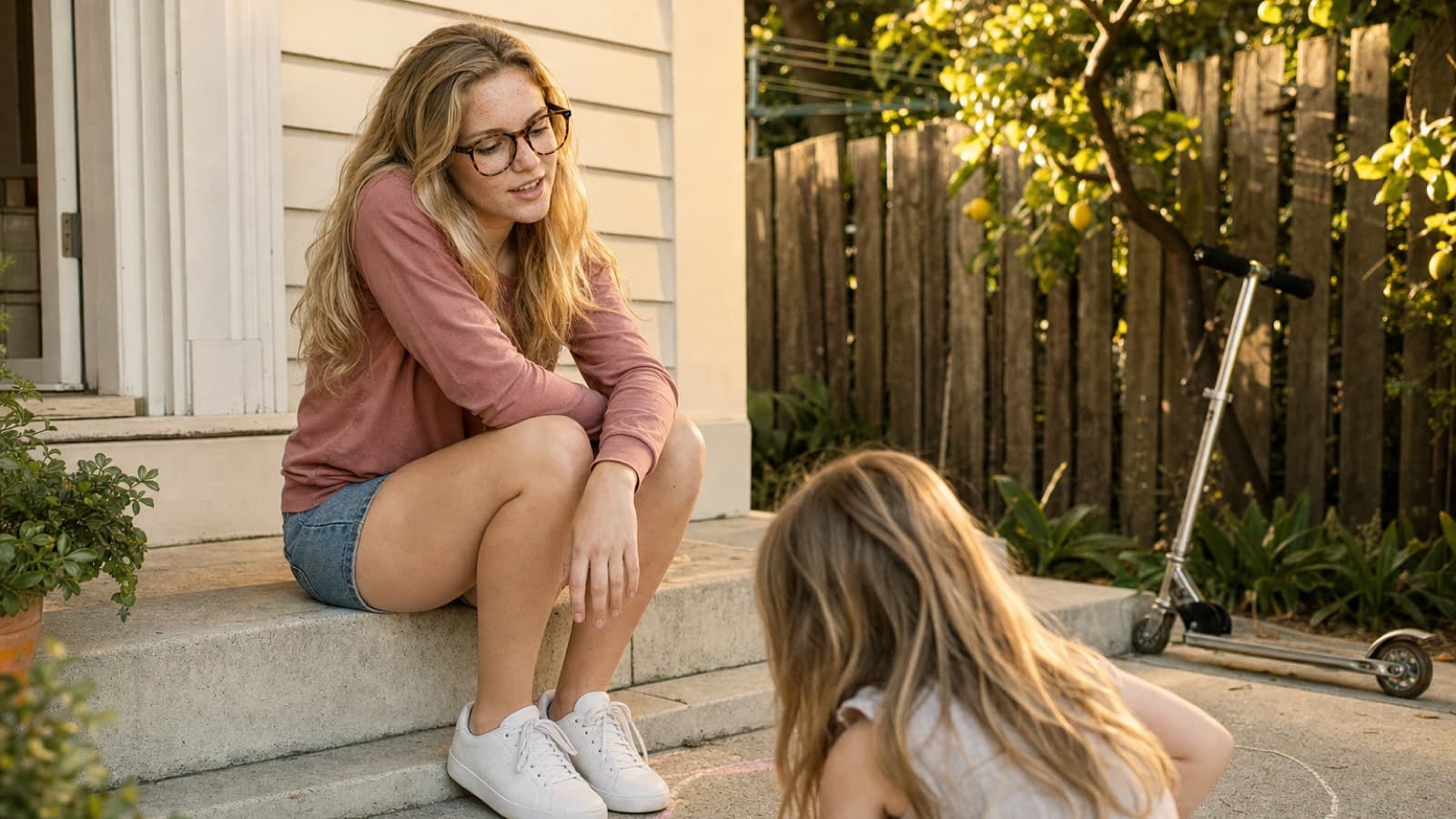
Most babysitting in Sydney is done by people under 25, and a good share of it by people still at school. Nobody writes for them. The guides that exist are written for adults with a car and a Working With Children Check, and they skip the questions a 16-year-old actually has: whether it is allowed, who will hire someone they do not know, how to get home at midnight, and what to tell their own parents. This is that guide. It is not legal advice, and everything in it is free to do.
How old you have to be
There is no law in NSW that sets a minimum age for babysitting. The decision belongs to the parents who leave their child with you, and the legal responsibility stays with them. Sixteen is the age it goes from a favour to a job, and it is the youngest age you can list a profile on this site. What is usual at 12, 13 and 14, and the answers to the questions people search about each age, are in how old do you have to be to babysit.
The age that does matter in law is 18. That is when NSW will issue you a Working With Children Check, and it is the age at which the Check scheme starts applying to you at all. It is not a gap you need to explain to anyone: casual babysitting arranged privately with a family does not need a Check at any age, and families hiring a teenager know that. They go on who you are, who they know in common, and how the first evening goes. Outside NSW the check's age changes, and babysitter requirements in Australia has each state's.
Where the jobs come from at 16
Your first three jobs will come from people who already know you, or who know your parents. That is not a consolation prize. It is how nearly every babysitter in Sydney started, at any age, because a family's first question about a stranger is "who can vouch for them", and at 16 the people who can are the ones who watched you grow up.
So ask them. Not "let me know if you ever need someone", which nobody remembers, but a message to the families you know with kids, naming the nights you are free: "I'm doing babysitting this year, I can do Friday and Saturday nights and school holidays, $25 an hour." A family with a six-year-old and no regular babysitter will reply to that within a day.
Before you ask anyone
- Decide your rate and say it in the message, so nobody has to ask
- Name the actual nights you are free, not 'whenever'
- Have one adult ready to speak for you: a family whose kids you have minded, a coach, a teacher
- Ask your parents first, because the family will want to know they know
The second wave is the school community. Parents of younger children at your school, or at a primary school your family has a link to, are short of babysitters and already trust the school. A note in a class group chat from your parent, or a word at pickup, lands better than any advertisement. Sports clubs, a church or community group, and your parents' workplaces work the same way.
After that comes the wider net. Families in Sydney who need a babysitter this Saturday post in local parents' groups and on this site, and they read profiles. Yours should say your age, your suburb, your rate, what you have actually done (younger siblings and cousins count, with ages), and name two people they can ring. Our babysitter resume guide covers how to write that up when you have no paid work to list yet. The open ads near you are in babysitting jobs in Sydney.
The hours a teenager can actually sell
Being at school takes weekday daytimes off the table, and that is where most nanny work sits. What is left is exactly the hours families struggle to fill.
Friday and Saturday evenings are the babysitting hours. Parents cannot cover them themselves, adult babysitters with weekend jobs often cannot either, and a 16-year-old who is reliably free on Saturday night has an advantage over most of the market. The same goes for Sunday afternoons.
School holidays are the other one, and it is the one most teenagers miss. Working parents have to cover about twelve weeks a year when school is out, holiday programs are expensive and book out, and a teenager with the same holidays as their kids is the obvious answer. Three days a week in the July holidays with one family is more work than a term of scattered Friday nights, and it is the kind of job that becomes a regular.
Regulars are the goal. A family who books you every second Saturday knows the routine, knows your rate, and asks you before they ask anyone else. Two regular families and one extra night a fortnight is a steadier income than any amount of hunting. It is also what a reference is: a family who can say you came back nine times.
What to charge at 16
Casual babysitting in Sydney in 2026 mostly settles between $25 and $40 an hour. A 16-year-old starting out with school-aged children sits at the bottom of that, $25 to $30, and it moves up with experience faster than most people expect. It is the same advice we give families paying a 16-year-old: someone alone in a house with a sleeping child is carrying the same evening at 16 as at 26.
There is a legal floor for junior employees, and it is much lower. Under the Miscellaneous Award a 16-year-old casual's minimum is $15.23 an hour in weekday daytime hours and $17.66 after 7pm. That is the floor for a regular employee, not a private babysitting arrangement, and it sits well under what any family in Sydney is actually paying. Our guide to what to charge has the full range and what sits behind each band.
Say the number before the first booking, in writing, along with how many children, what time you will finish, and how you are getting home. A family who has to ask what you charge has already started negotiating, and one message settles it. Anything above the agreed hours because they were late is paid at the same rate. That is normal and you do not need to be awkward about it. We never take a cut of what you earn. What a family pays you is yours.
Getting home, and your own parents
The job most teenagers get first is Saturday night, which ends at eleven or midnight, and the question of how you get home is the one to settle before you say yes. Under 18 you cannot open your own Uber account. A teen account exists, but your parent sets it up and it runs on their card. So it is one of three things: a parent from the family drives you, they pay for a taxi and see you into it, or your own parent picks you up. Any of those is normal. A family that has not thought about it will think about it the moment you ask.
Your own parents will want the address, the family's names, a phone number, and what time you will be back. Give it to them every time, not only the first time. For a family you do not know, it is fine and normal for your parent to come along to meet them on the first booking, or to be the one who drops you off. Families read that as a good sign. A parent who hands their child to a stranger for the evening understands another parent wanting to see the house.
Once you are in the house, the briefing before the family leaves is the same for you as for anyone: where they will be, a number that will be answered, allergies and medication, the bedtime routine, and where the first aid kit is. Our guide to becoming a babysitter has the list to ask, and it is worth reading before the first job rather than after. In an emergency, 000 first, then the parents, and nobody will ever mind that you rang them for nothing.
First aid, and the Check, at 16
Nobody makes you hold a first aid certificate. Almost every parent asks, and at 16 it is the single thing that most separates you from every other teenager offering to babysit. The course to do is HLTAID012, Provide First Aid in an Education and Care Setting, the one childcare centres require. It covers infant and child CPR, anaphylaxis and asthma, and it is a few hours of online theory plus a practical session. There is no age rule in the course itself. Ask the provider before you book, because some set their own minimum.
The Check is for 18. Until then nothing about it applies to you, and there is no form to fill in and nothing to explain. When you turn 18, apply, because from then on families will ask whether you hold one and a babysitter who answers with a number is easier to book. The application is $112 and lasts five years. Until then, the two people who can vouch for you do that job, and they do it well.
Tax at 16
You will not owe any. Australians pay no income tax on the first $18,200 they earn in a year, and no teenager babysitting on weekends gets anywhere near it. A few nights a month arranged with families you know is not a business in the tax office's eyes, and there is nothing to declare.
Get a tax file number anyway. It is free from the ATO, it takes a couple of weeks, and the first job with a payslip, a supermarket shift or a cafe, will ask for it on day one. Keep a note of what you earn babysitting once it becomes regular. Our guide to becoming a babysitter has the longer version for when it does.
If you are hiring a teenage babysitter
A 16-year-old with two years of minding siblings and neighbours is often a better babysitter than a 22-year-old with none, and cheaper by exactly nothing, because the going rate is the going rate. Pay them the range, not the junior floor, and you will get someone who comes back. Our rates guide sets out what to pay a 16-year-old.
Two things are different. The legal responsibility is yours in a way it is not with an adult, so the first booking should be short, the children should be ones a teenager can manage (a sleeping six-year-old, not newborn twins), and the briefing should be the full one. And they need to get home. Drive them, or pay for the taxi and watch them get into it, and say so before the first night so their parents can say yes with a clear conscience.
Expect their parent to want to meet you, and offer before they ask. Then treat them as you would any babysitter: the questions to ask are the same, and the references matter more, not less. Babysitters near you, with ages on their profiles, are in search across Sydney.
Where these facts come from
The age and Check rules are the NSW Office of the Children's Guardian's, as published in September 2026. The junior award figures are the Fair Work minimums under the Miscellaneous Award current from July 2026, and they move every July. The tax-free threshold is the ATO's. The rate range is what Sydney babysitters on this site list and what families report paying. The advice on regulars, holidays and getting home is ours. None of it is legal or tax advice, and nothing here binds you to a number.