The law
Paid parental leave in Australia (2026): how long, how much, and planning care after
A baby born from 1 July 2026 brings up to 26 weeks of Parental Leave Pay at $1,004.70 a week. Who qualifies, how partners share it, and care after.

When I was pregnant I had four tabs open on parental leave and still couldn't have told you how many weeks we'd get. This is the short version, from Services Australia and Fair Work as they read on 22 November 2026, and then the part those pages leave to you: who minds the baby when leave runs out. It's general information, not legal or financial advice, so check Services Australia for your own case.
How long is maternity leave in Australia?
There are two clocks, and it helps to keep them apart. Parental Leave Pay is the government's payment: up to 26 weeks (130 days) for a child born or adopted from 1 July 2026, or 24 weeks for a child born in the year before. Parental leave is the time off your employer has to give you, up to 12 months unpaid, which comes further down.
The paid weeks have gone up each July: 22 for a baby born from July 2024, 24 from July 2025 and 26 now. The schedule on Services Australia's page stops at 26, so a baby due in 2027 gets the same 26 weeks unless the law changes. Plenty of employers pay their own parental leave as well, set by your contract or agreement, and you can get both.
How much is Parental Leave Pay?
It's paid at the weekly rate of the minimum wage: $200.94 a day before tax, or $1,004.70 for a five-day week, for days taken in the 2026–27 financial year. It's taxable. The rate usually moves on 1 July and follows the day you take, not the day the baby arrived, so leave that runs across July is paid at two rates.
For a child born from 1 July 2025, the ATO also pays a super contribution of 12% on it, straight into your fund once the financial year ends. You don't claim that separately. Most of the time your employer pays Parental Leave Pay through your normal payroll, and sometimes Services Australia pays you directly.
Who can get it: the work test and the income test
You need to be caring for the baby, meet the residence rules and pass two tests. Both are measured before the birth, so it's worth checking them while you're still pregnant.
The two tests
- Work: you worked in 10 of the 13 months before the birth, and at least 330 hours in those 10 months, about a day a week
- No gap longer than 12 weeks between workdays in those 10 months. Paid leave counts, and so does working for yourself
- Income: your adjusted taxable income was $186,487 or less in 2025–26, the financial year before the birth or your claim, whichever is earlier
- Over that, your income and your partner's together can be up to $386,525 instead. If you're single, your own income is held against that family limit
The work test and the income test each have their own page with worked examples, and both are worth reading if your last year was patchy.
How partners share it, and what happened to Dad and Partner Pay
Dad and Partner Pay is gone. It was folded into Parental Leave Pay for children born from 1 July 2023, and claims for it closed on 30 June 2024, so partners now draw from the same pool.
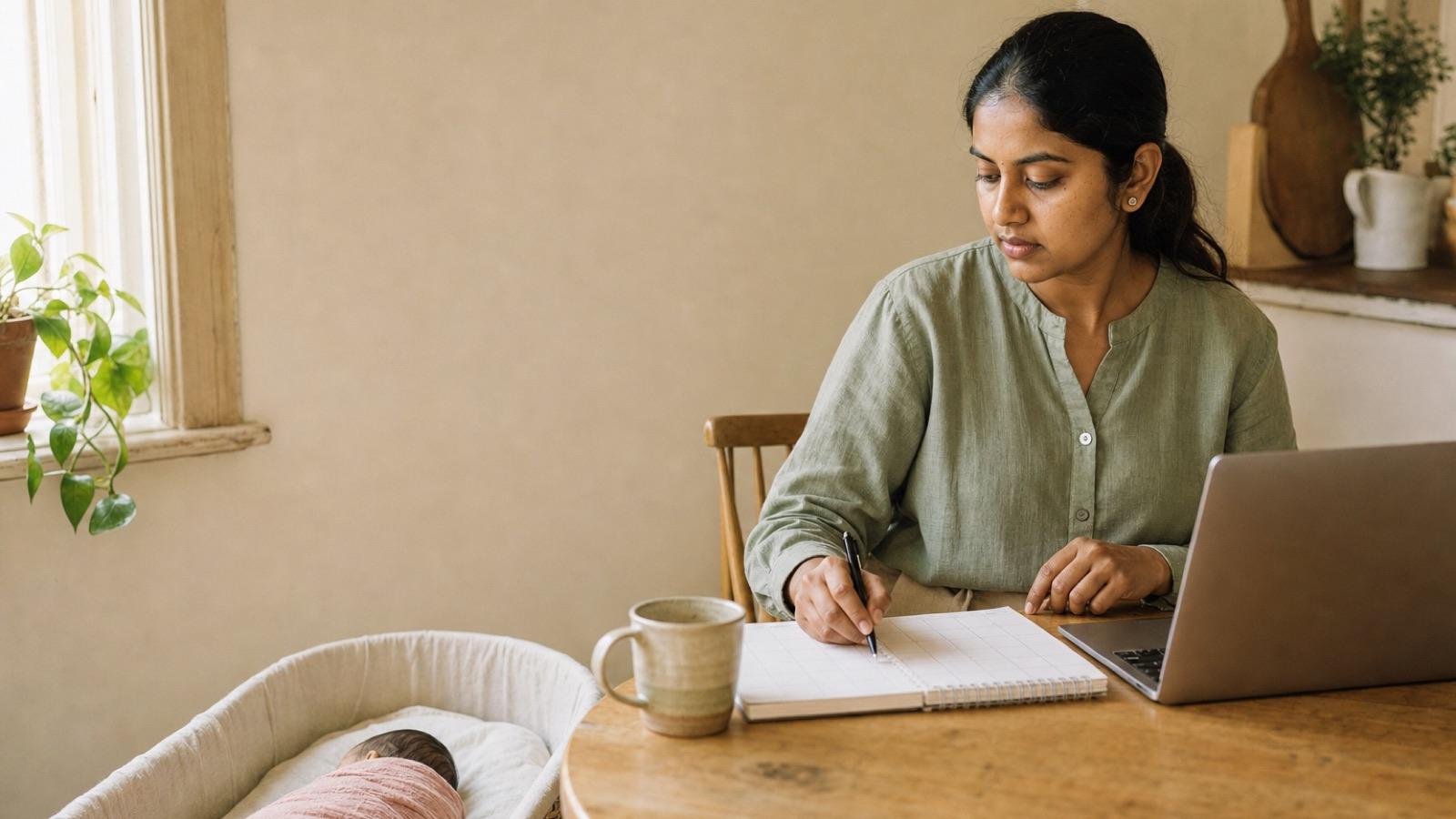
If you're partnered, 20 of the 130 days are kept for the other parent. Those days come off even when only one of you is eligible, so a partnered parent claiming alone gets up to 110 days. The rest you split however suits, and you can take up to 20 days at the same time. Days can go as one block, smaller blocks or single days, and each of you makes your own claim. We did ours with the calendar on the fridge and a pen, which is about as technical as it needs to be.
Unpaid parental leave and keeping your job
Under the National Employment Standards, an employee with 12 months' service with their employer can take up to 12 months of unpaid parental leave. Casuals qualify too if they've worked regular, systematic hours there for 12 months and expected to keep going. Each parent in a couple gets their own 12 months.
You can ask for up to 12 more, in writing at least four weeks before the first 12 end. Your employer has 21 days to answer and can only refuse after genuinely trying to agree with you. Give at least 10 weeks' written notice of your dates before you start. When you come back, the job you left is yours, even if someone has been filling it. If the role has gone, you're offered the nearest suitable job in pay and status.
During a continuous stretch of unpaid leave, you and your employer can agree to up to 10 keeping in touch days, paid as normal: a training day, a planning meeting, a morning at your desk. One of those is also a good dry run for care, with the baby minded by someone else for a day before it's every day.
Going back: asking for flexible work
Coming back to the same job usually means the same hours. If you want fewer days, different start and finish times or some days at home, you can ask in writing if you're the parent of a child school age or younger and have worked there for 12 months. Say what you want changed and why.
Your employer has 21 days to reply in writing. They can only refuse on reasonable business grounds, and only after talking it through with you. Settle this before you lock in care, because three days a week and five days a week are different searches.
Planning care for when leave ends
This is the part no government page covers. If a day care centre is the plan, ask about its waitlist early. I put our names down before the baby arrived and was glad I had. A nanny search moves faster, but I'd still start about two months out, so there's room for a paid trial shift.
Day care centre
A daily fee per child
- The Child Care Subsidy covers part of an approved centre's fee
- Set hours, and often a waitlist
- A baby with a temperature stays home, and so does a parent
A nanny at home
An hourly rate your household pays
- You're usually the employer, so tax, super and leave sit on top
- The Child Care Subsidy doesn't cover a nanny you hire yourself
- Your hours and your house, sick days included
What a nanny costs has the per-hour and per-week numbers, and whether a nanny works out cheaper than a centre. How to hire a nanny in Sydney covers the ad, the trial shift and the agreement, and if you'll be working from home with the baby close by, its section on a mother's help is the arrangement to look at. Either way, a babysitter covers the gaps: a keeping in touch day, the first weeks of a gradual return, the morning the centre sends the baby home.
What we do, and what is yours
We're where you find a nanny or babysitter near you: search, read profiles and message whoever you like. A verified badge means we've checked their ID and their Working With Children Check, and nothing more. We never touch payments, and sitters keep everything they earn. The leave, the payment and the claim stay between you, your employer and Services Australia.